Hello to all and welcome!
I can't really say what you should expect to see here as I've never before tried blogging or anything similar. It'll have to be a work in progress. I'll probably talk about photography in general (and mine in specific) as well as point out different things that are going on that I find interesting or worth commenting on. If anyone (assuming anyone actually ends up reading this) has questions or suggestions on topics, feel free to let me know.
I'm here you're with me, here at the beginning of all things.
Roger
p.s. Comments and feedback are very welcome.
Photos of the Week - Playing in the Snow
Last blog post I talked about playing around indoors, using orchids as a starting place. This week, it is time to go outside and play in the snow.
There are a couple of things to keep in mind when shooting in snow. First, the camera reads snow (and everything else) as gray. So, pay close attention to exposure (both when shooting and also when processing). Try to keep the snow white, but don't over- or under- expose the rest of the image while compensating.
That said, there are several ways to approach shooting in the snow: subjects covered in snow, subjects on top of snow, subjects that are wintery (regardless of snow).
Going back to front, here's an of example of a wintery setting:

This was taken several years ago at Minnehaha Falls (although something similar is available every winter). When the Falls freeze, you get very interesting sets of icicles. It is even possible to go behind the Falls, but that requires better footing than I was comfortable with, especially carrying a camera. Note that the blue is both from the water and from reflecting the blue of the sky.

Here's a different sort of wintery landscape. This one highlight the snow on the trees. I was especially fond of the way the snow sticks to the side of the tree.


I love shadows. They clearly show something that is not actually there. They're real and fake at the same time. They also show up great on/against snow. One thing to keep in mind, though, is that providing an anchor point can greatly help the viewer understand what they're looking at (like the trunk in the top right corner).

Obviously, snow and winter can also work well in black and white. Textures stand out well and any white in the snowy areas are expected.

Plants (and other things) covered in snow can also be interesting. The yucca plants here become abstract and repetitive shapes, recognizeable but unexpected.

Or, finally, you can just play around with the snow itself. Small mounds become hills and dunes. Windblown textures abound. Shadows stand out and define the shapes.
So, play around and see what else you can do when out in the snow.
Photos of the Week - 1/15/2015
Winter is a weird time. It is cold and white outside, warm and colorful inside. At least, that's what it's like in Minnesota. So, what's a photographer to do?
Play!
Try to do something you've never tried. Something absurd. Something you would normally hate. Anything new, just to see the result.
If you like the result, do it again. If you hate it, delete them pixels.
There's an orchid show opening down at the Arboretum this week. Admission is free through January. These are a great subject to go crazy with.
Here's what I mean:

This is a stitched panorama (that I wish hadn't been cropped off the top). Shoot the whole flower, or bunches. Or try stitching ones together for a different perspective.

Try macro or close-up shots. The colors and shapes are fantastic. You could try convering them to black and white if you really want to experiment.
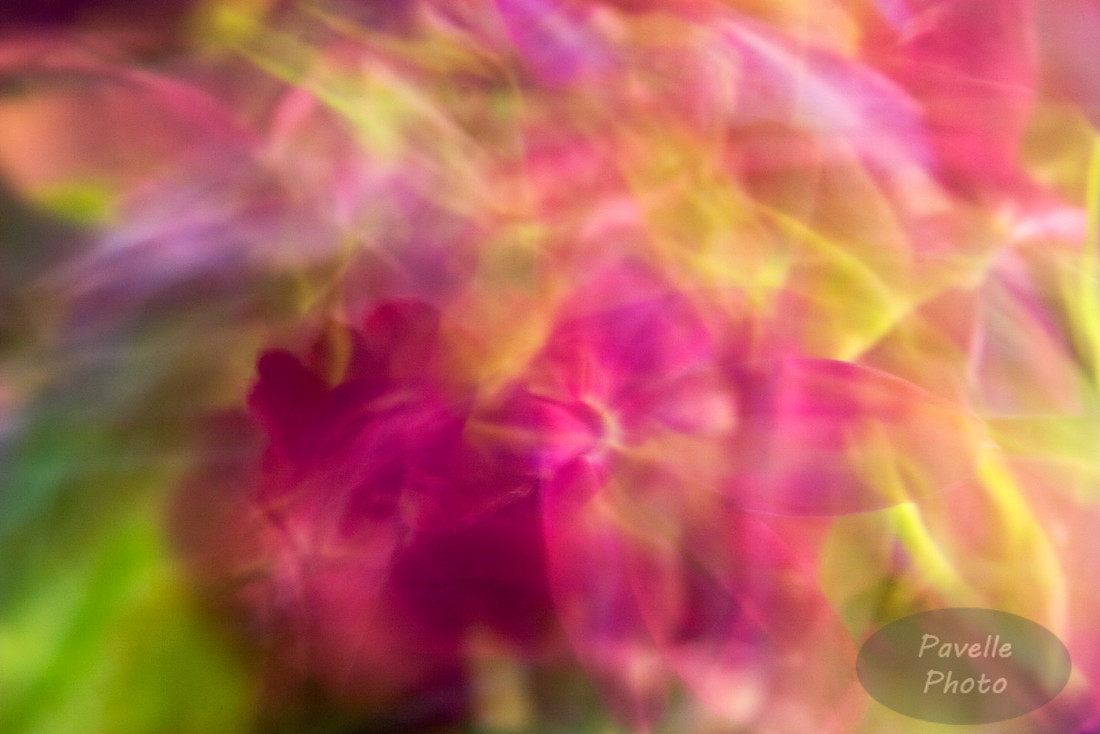
What happens if you move the lens in some way while making your exposure? Zoom in or out? Rotate from landscape to portrait? Kick the tripod? The easy answer is that you get lots of artifacts, like in this shot. But I love the play of colors and the way you can almost see some of the flowers.
Stop reading. Go play!
Photo of the Week - 1/7/2015
Happy New Year to all!
This year's juried show at the Arboretum should be up soon (if not already). It showcases 24 images by members of the Arboretum Photographers Society. The photo of mine that was selected this year is the hooded merganser shown below.
I encourage everyone who can to come out and see the display. Especially in January, when admission is free.

Photo of the Week - 12/31/2014
It's the last day of the year, and that generally means you need to find an appropriate way to wrap up/summarize the year that has passed. In my case, photographically.
The first thing that comes to mind is a reflection of some sort. Of course, that is something of a cliche. But, reflection of a different sort can lead to something appropriate.
In a lot of ways, this past year has been (for me) one for the birds. Yes, that means just what you think, but also more.
I've taken a lot of good bird photos this year, and a lot of them are ones I've never managed to capture before. Hooded mergansers, hummingbirds, horned grebes. I've also been happy about some of the mallards, turkeys, coots and others that I came across.
It has also been a good year for travel/flying. I got back to New York for the first time in over 5 years. Visits with family over holidays and weddings.
So, flying birds is a good theme. Since it is the end of the year, it should be a sunset image as well. That makes the choice easy.
Here's an image from several years ago of sandhill cranes at sunset. This image has not been tweaked in any way whatsoever. No changes to hue, saturation or contrast. No cropping. What you see is what I saw.
Happy New Year to everyone who reads this (and everyone who doesn't as well)!

Photo of the Day - 12/25/2014
I don't really have a whole lot of images that are good Christmas photos. So, here's one I took in Ceske Krumlov in the Czech Republic. I can't decide if the infant in the statue is giving a blessing or scolding someone. Either works for me.
Happy Holidays to all!
